
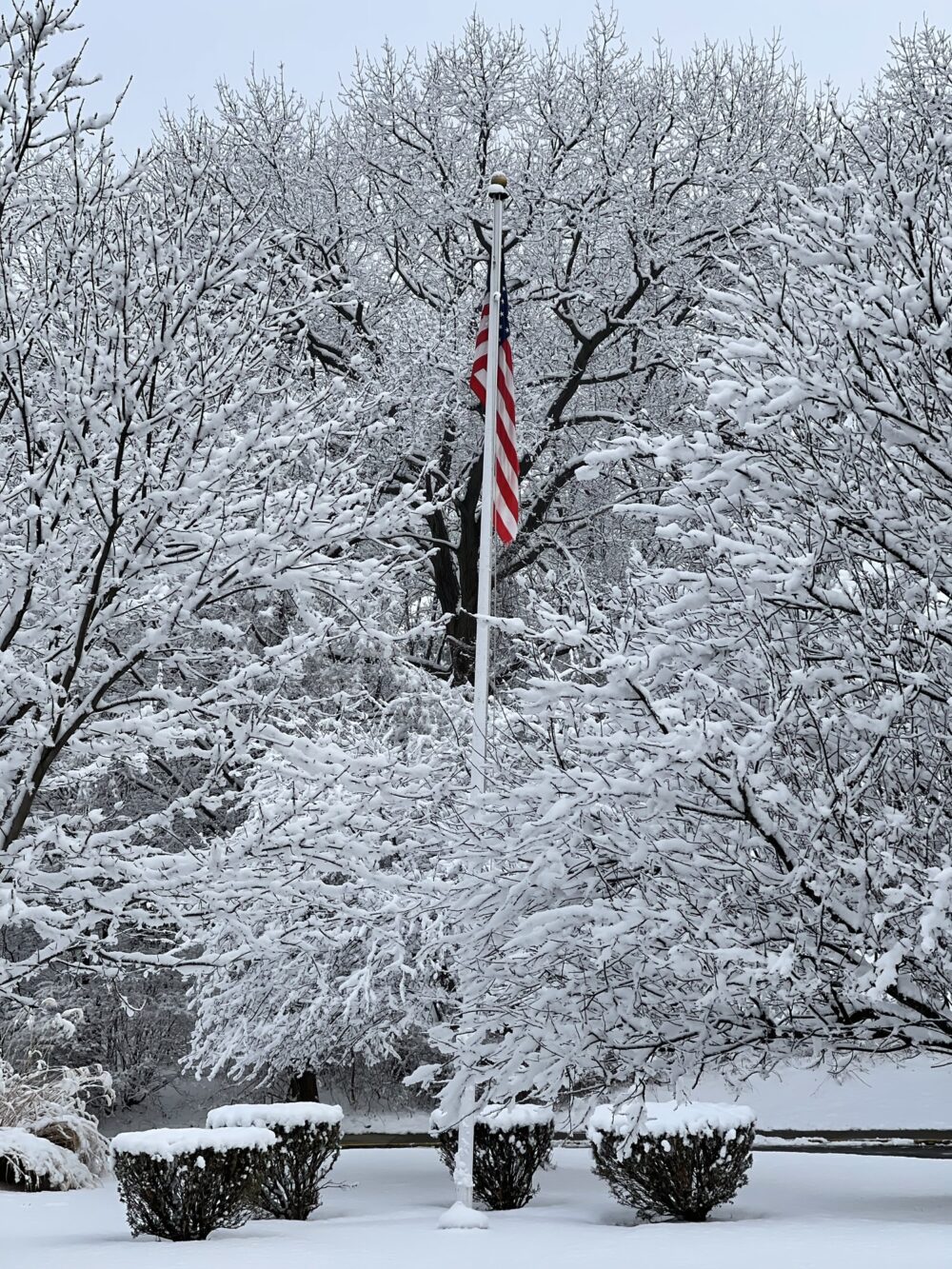
Earlier this month, a friend shared something on a social media account about “winter” as a verb (rather than a noun). It resonated with me. I’ve spent a good deal of attention the last few months trying mentally and emotionally to prepare for the times ahead.
We winter during the time of cold and darkness, husbanding our strength, not making major moves or opening new fronts. Think George Washington and the Continental Army at Valley Forge, or Lewis and Clarke’s Corps of Discovery at Fort Mandan in North Dakota, not a New York snowbird “wintering” in Florida. It’s not that we withdraw from the world. But we remain realistic about what we hope to accomplish.
It’s a very useful metaphor for our world today. A major arrogance of our society is that we insist on being able to enjoy what we want, regardless of time or place. The sin of my generation’s penchant for avocado toast is not our enjoyment of a “luxury,” but that we assume fresh avocados are something we ought to be able to have in the northeast US in wintertime. My hope has been that we seek out what is local and in-season, and that we enjoy and celebrate that instead.
I’m starting to understand that a similar phenomenon likely exists with respect to social progress. History teaches us that progress comes in waves, and it is usually followed by periods of reactionary backsliding. Those of us working towards social progress need to learn to winter during those reactionary periods, consolidating our gains and conserving our strength for the next period of light and warmth. A maple tree that tries to keep its leaves during the winter will freeze and die, unable to grow further in the spring. Even evergreen trees don’t sprout new growth in the winter.
What shape might such wintering take? We ought to look inward for ways to develop ourselves, and outward for ways to strengthen our communities. For me, the former might include more in-depth reading and study about how to build political strength in reactionary periods, while the latter might mean growing more meaningful relationships with neighbors or acquaintances. I feel that wintering also includes finding and cultivating for ourselves sources of emotional joy and nourishment, e.g., indulging in a hobby or patronizing the local arts scene.
Of course, this mental exercise does have a major moral drawback: life dies in the winter. While the ecosystem, or army, etc. as a whole may survive and enjoy growth or progress or victory in the spring, individual plants, animals, and people often don’t make it. If or when we adopt a “wintering” posture with respect to social progress, we almost inevitably condemn some people. It might be the woman who’s denied life-saving healthcare because of an abortion ban; or the black man who’s locked up in jail because he can’t afford bail while a white man who commits the same act is freed on his own recognizance (or not charged at all); or the transgender child who commits suicide because they can’t handle another moment trapped in a body that feels alien, in a society has decided that allowing them to thrive as themself feels icky.
I don’t think that means we can avoid the need to “winter,” but we mustn’t allow wintering to become an excuse for inaction. We must also remember that while meteorological winter is set for us by nature, the reactionary, societal “winter” is a condition we collectively create. We can work to warm, thaw, and lighten our world to hasten the coming spring. Our outward behavior becomes an example of the kind of society we seek to build. We can publicly advocate for policies and laws that treat people with dignity and compassion. We can take action to help those more vulnerable than ourselves: small but meaningful steps to make our society a less cold and indifferent place. And we can share the works of our minds and imaginations with those around us, enriching our communal culture.
Our task for this moment then is to find the balance between the internal and external effort. We need to focus on rebuilding ourselves and our communities physically, emotionally, and intellectually. We need to accept that doing so is work and requires deliberate attention and energy. And we need to recognize that it’s this work that will allow us to survive the winter and emerge into the spring with strength and vigor. But we must not lose touch with our own agency in lightening the darkness around us. Balancing those two conflicting ideas is how we winter.