

I tried learning a new recipe yesterday: a Bloomer. It’s another Paul Hollywood recipe, this time from his Bread book. It’s essentially a plain white loaf, but with a higher water to flour ratio, the dough is more wet and sticky, and it rises longer.
It was my first time trying to work a stickier dough. I’ll say that the structure of this book (as opposed to the 100 Great Breads book where I’ve found the other bread recipes I’ve tried) is very helpful for a beginning baker like me. There’s a good deal more explanation of technique, both words and photographs.
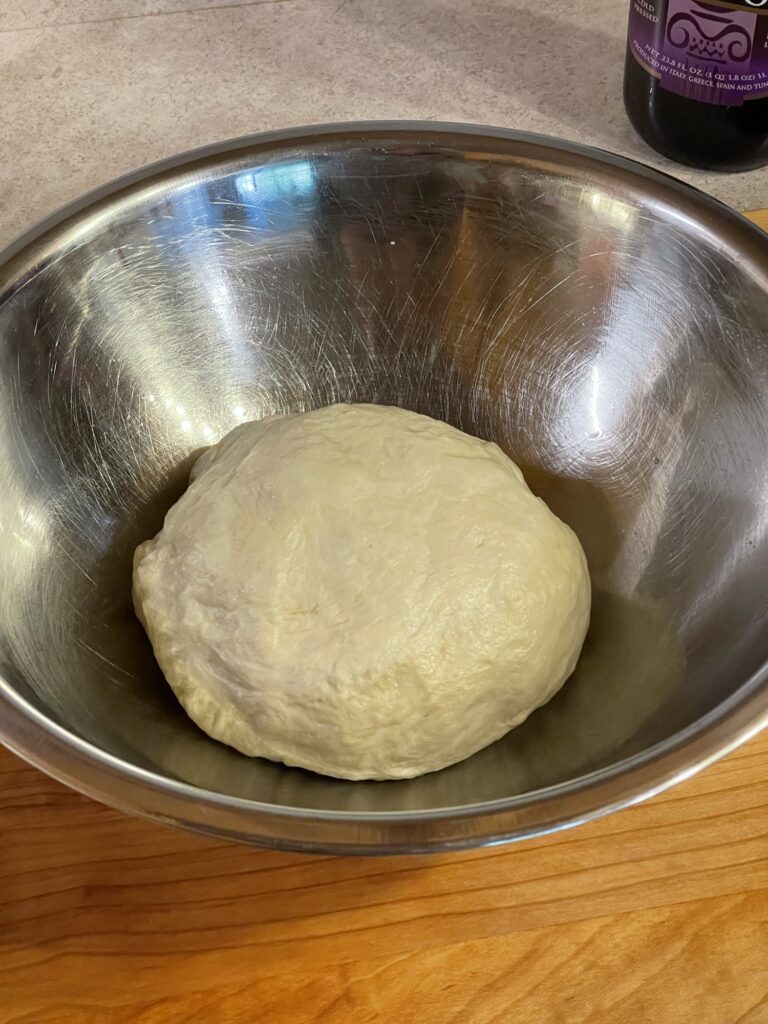
The resulting dough is much softer when it’s time to rise.
It’s supposed to triple in size. I’m not yet very good at gauging whether it’s risen enough. It made the kitchen smell good though.
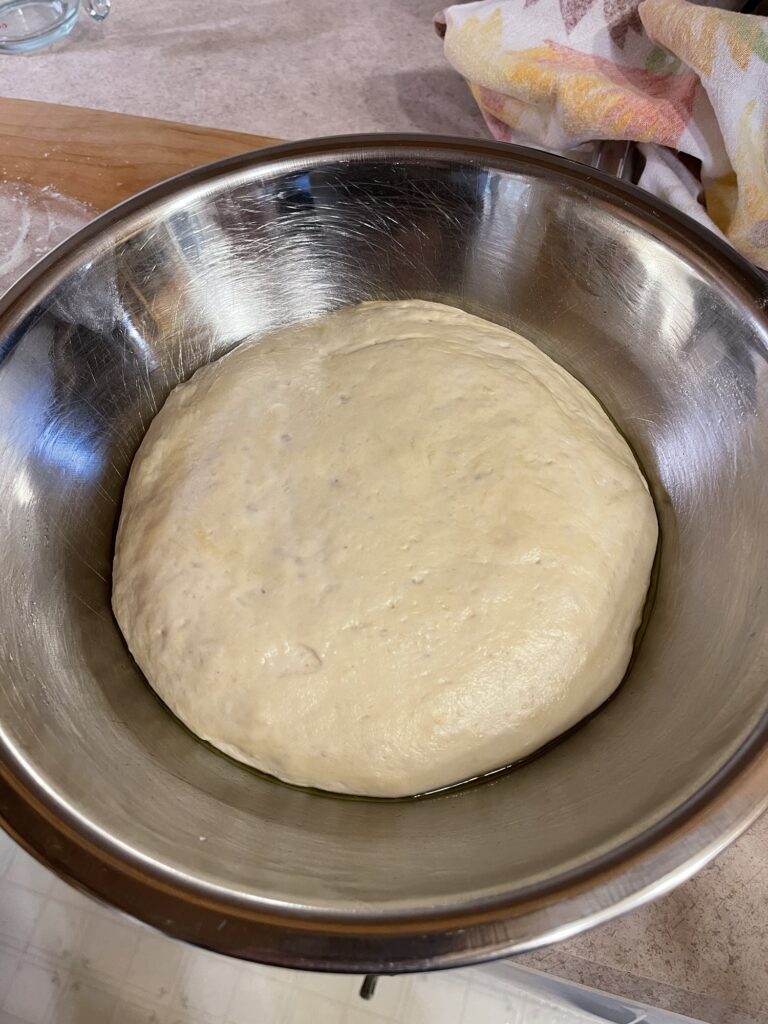
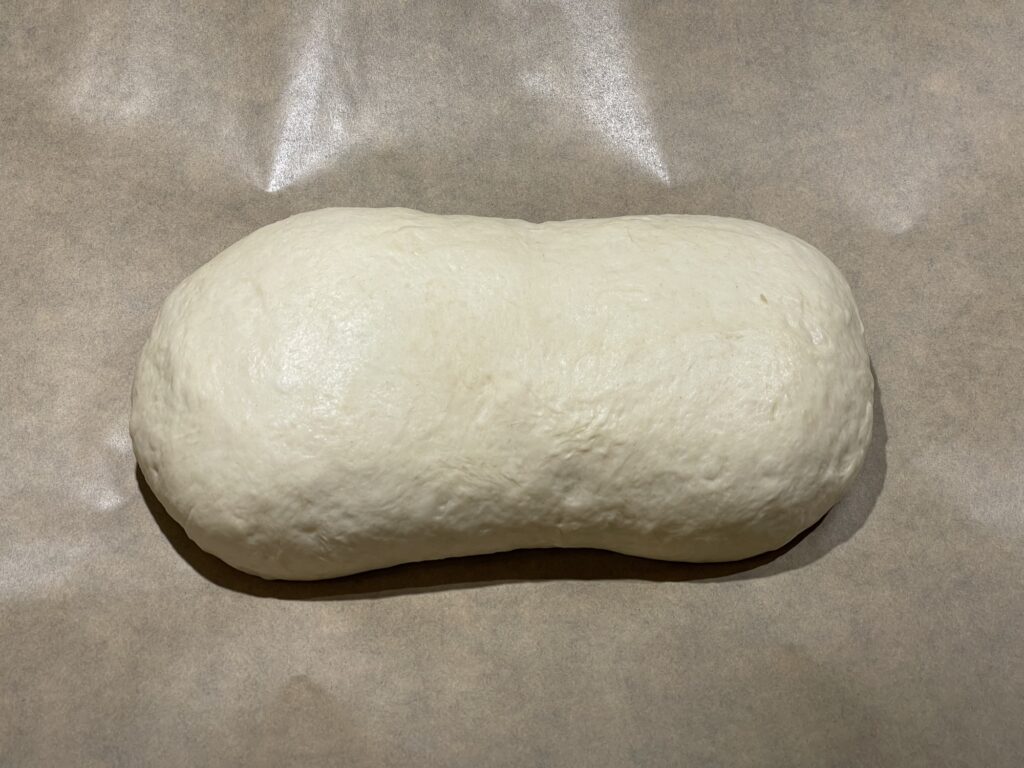
I don’t think I did a great job of shaping the loaf. I always worry when I punch it down that I’ve flattened it too much. I’m not sure if that’s really a concern. But then it doesn’t seem quite as substantial as maybe it ought?
I let it prove a little over an hour.
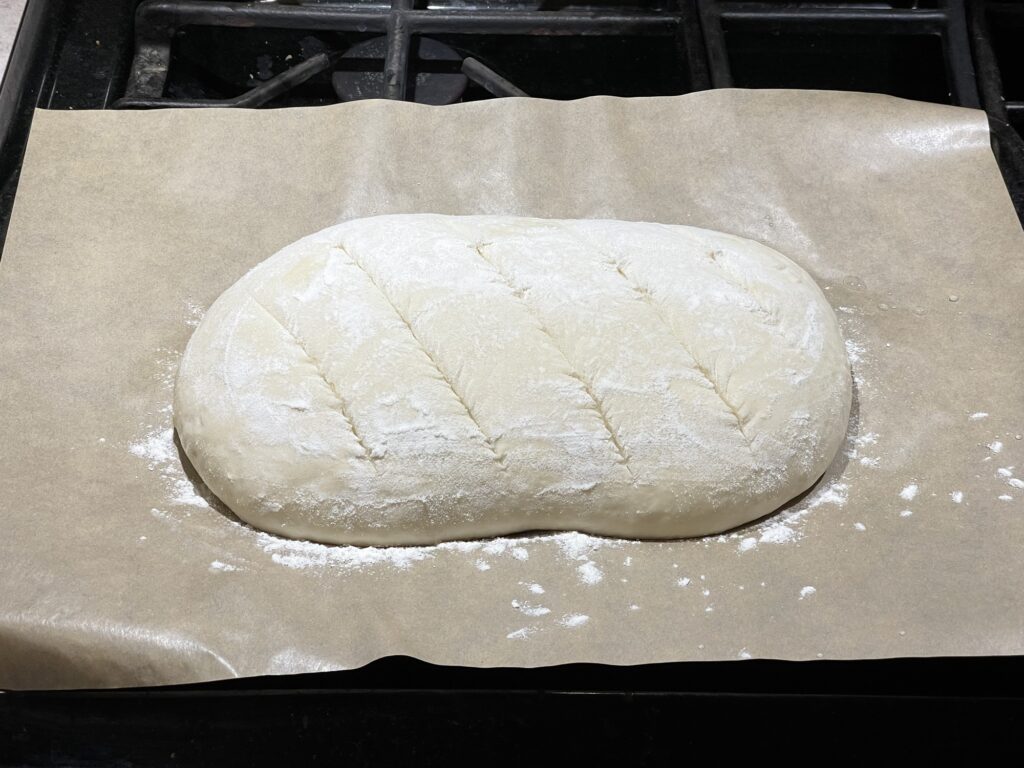
Paul Hollywood recommends slashes 2cm deep. I did not achieve that. I’ve slashed other loaves too deeply in the past, and I was a bit tentative. This is a different bread, and the slashes need to be deeper.
This is the first time I’ve used a pan of water in the oven to make the crust crispier. I’m not sure I did it properly. The roasting pan pre-heated in the oven, and I added the water right before I put the bread in. But the water wasn’t warm yet, so I think the bread baked before the water had a chance to get up to the temperature to produce steam. I’ll have to try using hot water next time, or adding it quite a bit earlier, so the oven is steamy when I put the bread it.
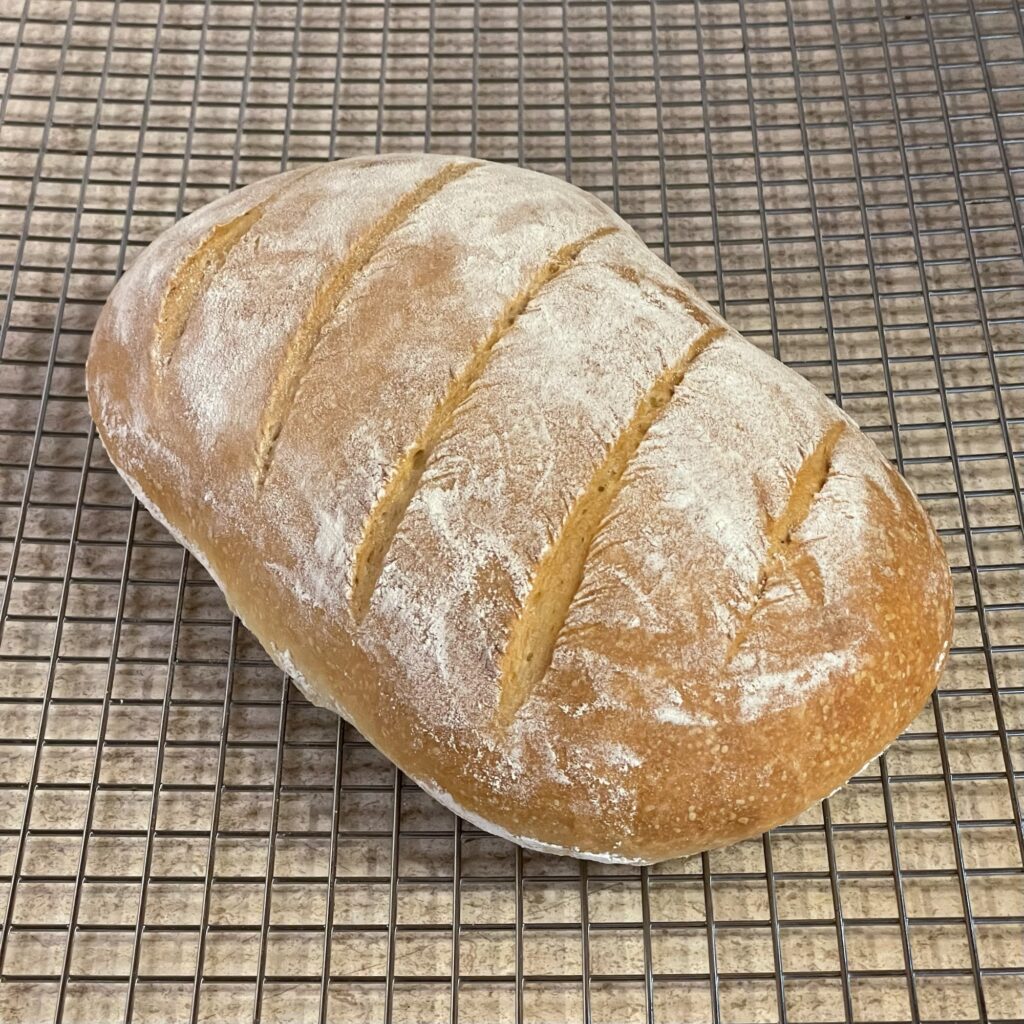
The resulting crust wasn’t as hard as I would have liked or expected. You can also tell that my slashes weren’t deep enough. I don’t think the loaf “bloomed” as much in the oven as it should have, because the crust kept it down. It didn’t pull away from the bottom though, as some of my other loaves have.
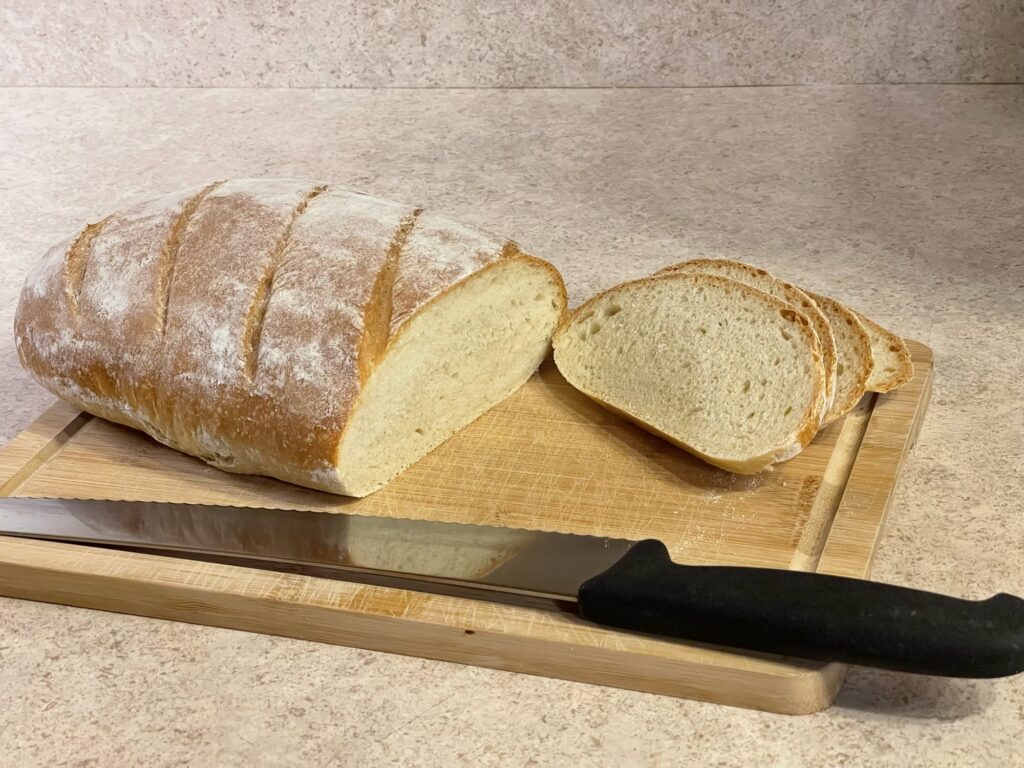
I was worried that the center wasn’t baked enough. It sounded hollow when I tapped it coming out of the oven, but as it cooled, it felt a bit denser. I think that’s more likely because the crust wasn’t as hard.
As it turns out, it was a great loaf. The flavor was strong (having a combined four hours of rise certainly helped, and it was light while still holding together.
2 thoughts on “Yesterday’s Bake: Bloomer”