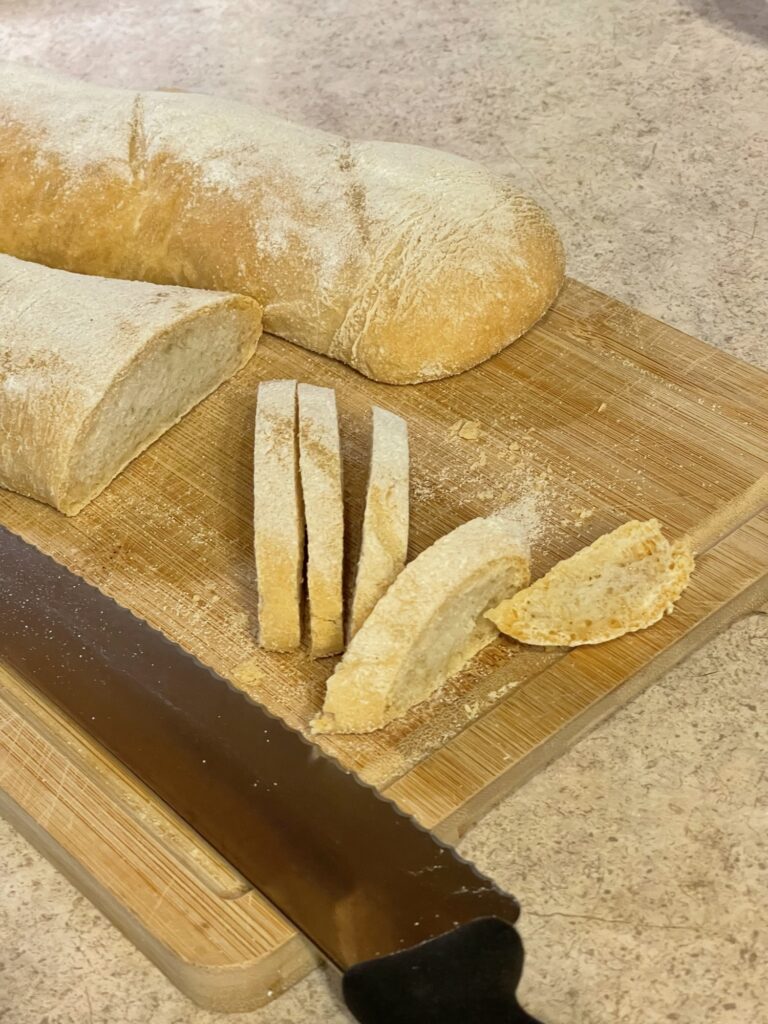
I’ve been trying to branch out a bit more in my baking, so I took advantage of an unexpected morning at home to try something new: mini baguettes. As with the Bloomer, I followed the recipe in Paul Hollywood’s Breads book. This one definitely challenged me.
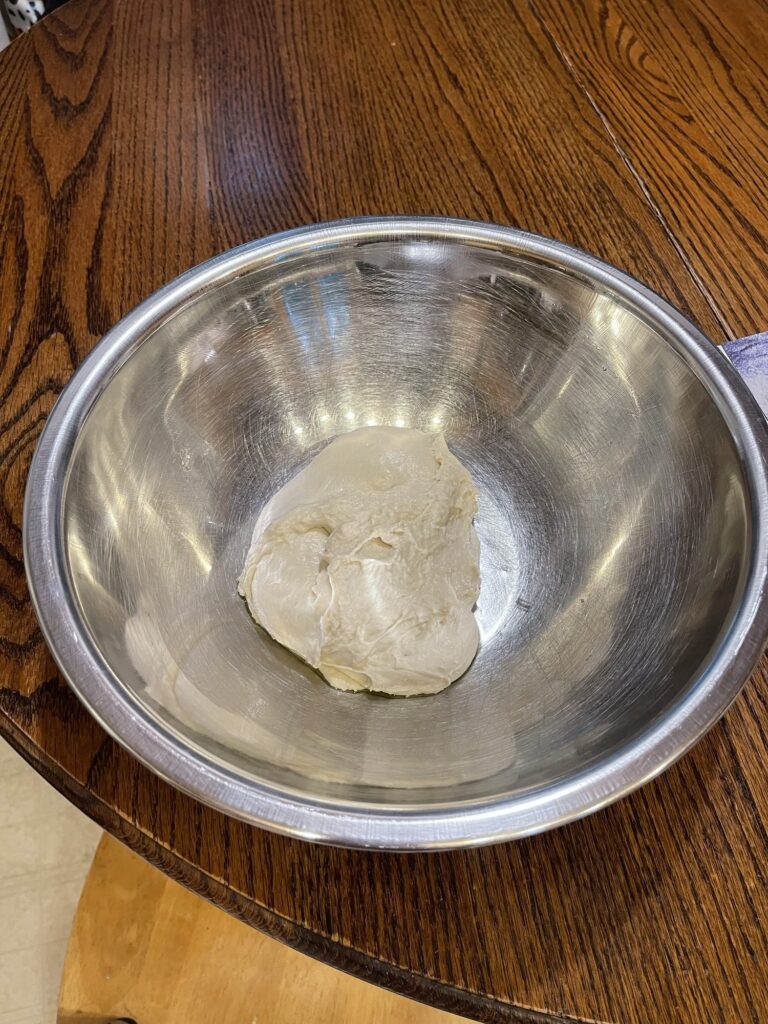
Forming the dough was straightforward enough, especially since he recommends you use a mixer to knead it. The result was fairly light and wonderfully stretchy.
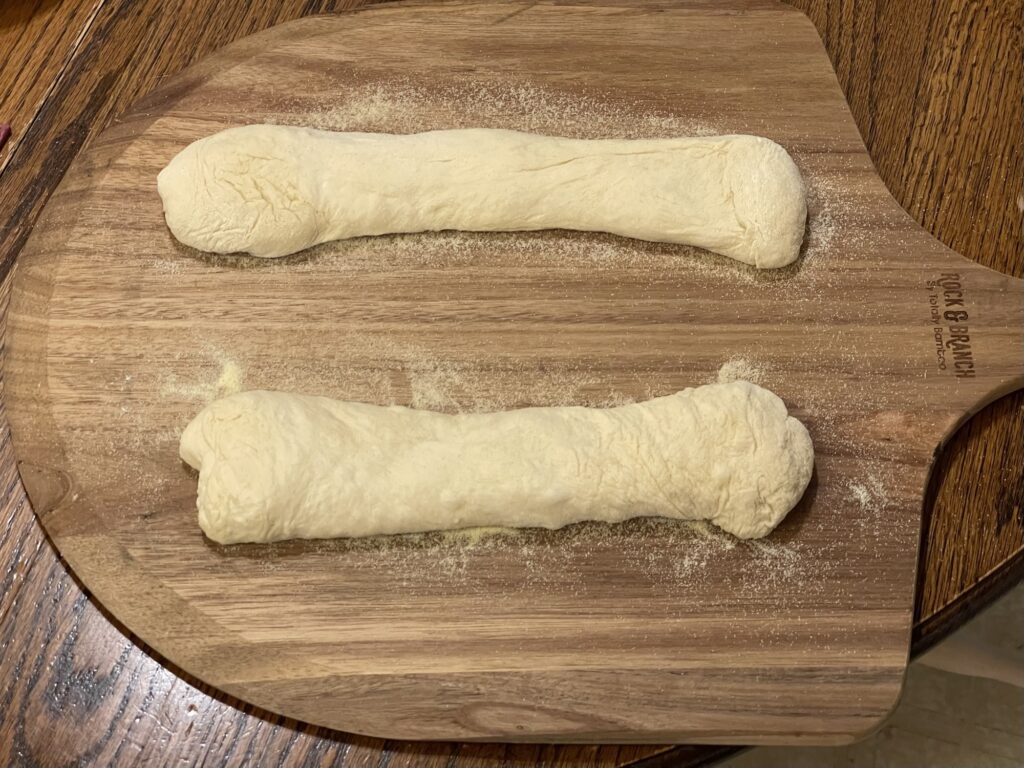
I don’t think I quite got the process right when it came to forming the dough into baguette shapes for the second rise. It seemed that whatever I did, the ends remained thicker than the middle, leading to an unfortunate shape. I may not have done myself any favors by using a peel and pizza stone, rather than a baking tray in my first attempt.
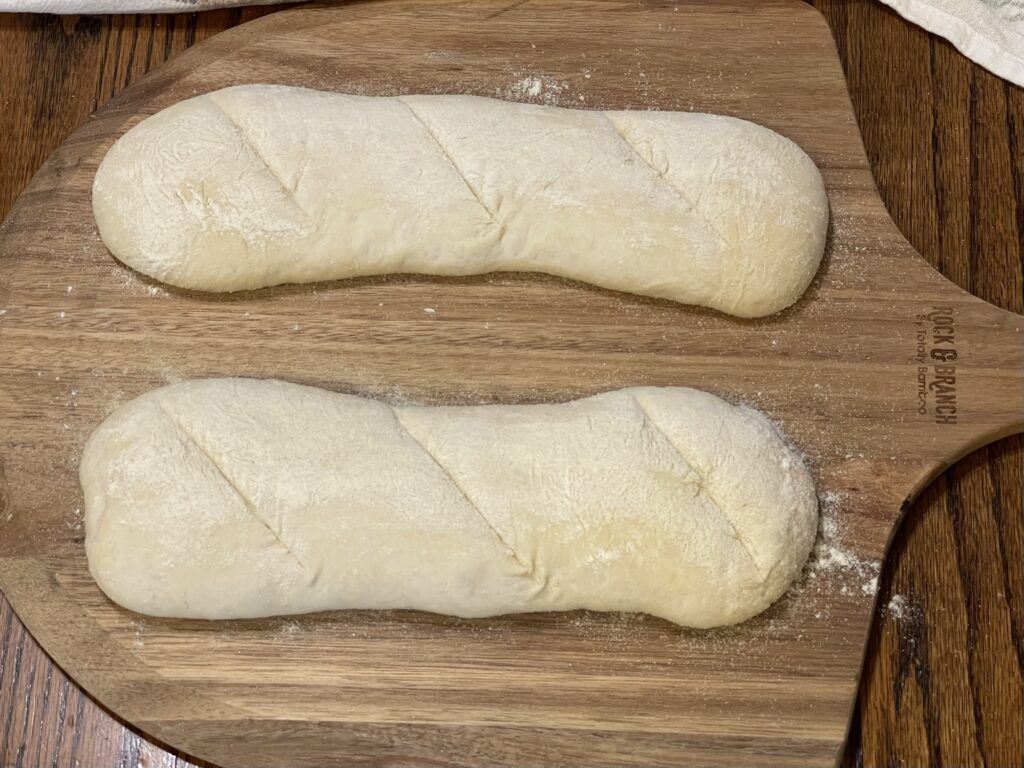
I also think I may have let them rise just a bit too long. I don’t use a proving bag either (we have a general aversion to unnecessary plastic in our house, and I haven’t really looked for an alternative other than a tea towel, which isn’t airtight.
But I think I got the slashes closer to correct this time.
Given my experience with the Bloomer (which was the first bread I’ve tried baking that uses steam to give a harder crust), I went looking for more information on how that’s supposed to work. I found a very decent explanatory guide from King Arthur Flour (they have some great recipes as well. I ought to try some of them). I’m still not sure I got it quite right, though I expect the use of the pizza stone may have made it slightly more difficult.
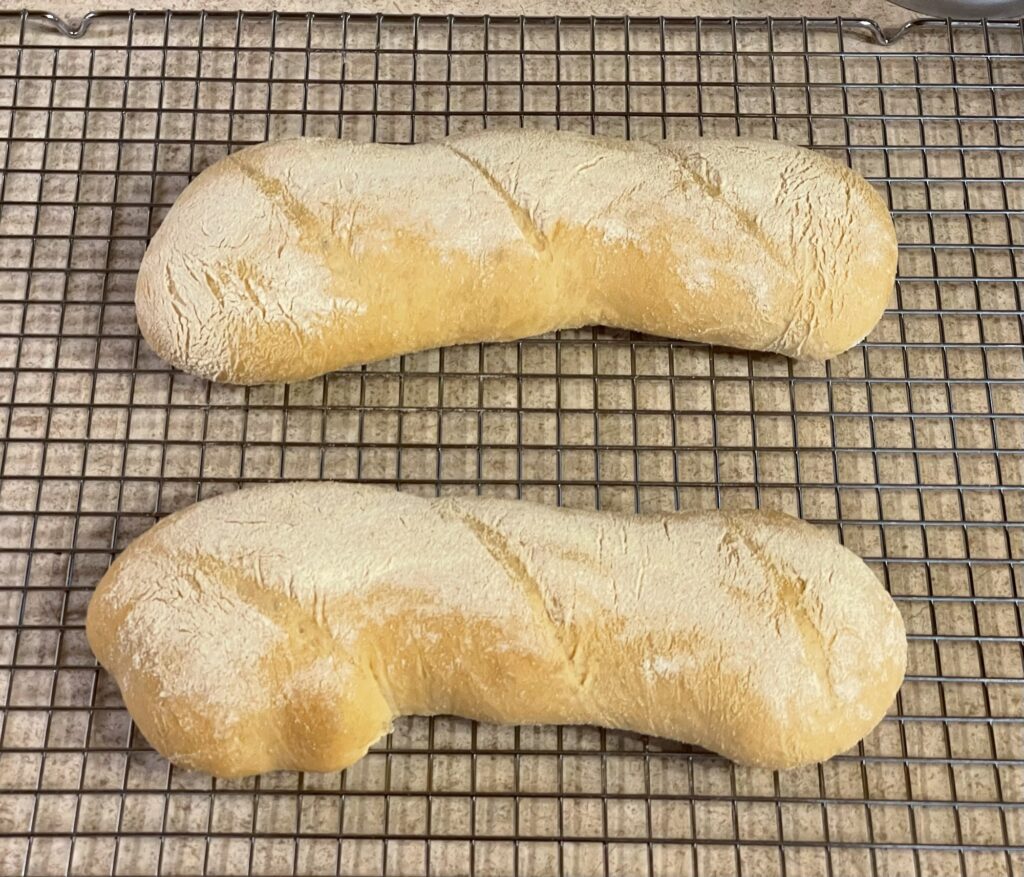
Some of the odd shape can be attributed to the fact that they were both on the same peel, and I couldn’t slide them off quite as directly as I would have liked, leaving one a bit misshapen. You can also tell that the steam didn’t quite do its job: the color should be much darker and the crust shinier.
The end result was edible, though not very exciting. We did enjoy it with some brie. The process wasn’t so cumbersome that I couldn’t try it again easily enough. Hopefully with some more practice, I can form them more effectively and get a better outcome.